《焦点是在改变!》
作者:看不顺眼
日期:2012年9月1日 晚上10点12分
摘取: 《当今大马》
美国史丹佛大学(Stanford University)是加州一所重点大学,1885年,加州铁路大王李兰?史丹佛(Leland Stanford)决定在帕洛?阿图(Palo Alto)成立一所大学来纪念早逝的儿子,他首先捐出自己用来养马的8180英亩农场来建校。
史丹佛大学真正的崛起是在70年代,1959年,大学史无前例地将1000英亩土地以象征性的租金,长期低廉租给工商业界或校友来创业,再鼓励这些租户与大学合作,提供各种研究项目和实习机会。因此,史丹佛成为美国首家在校园内成立“工业园区”的大学。随着这个概念的成功,在校园内发展的企业渐渐向外发展扩张,形成了美国加州科技尖端及精英云集的“矽谷”(Silicon Valley)。
史丹佛大学教学讲究创新,最出色之一就是史丹佛科技创业计划中心(Stanford Technology Venture Program)的课程。听了这所中心的名字,人们往往都会联想到矽谷的高科技,可是,实际上,这所中心强调的是激发学生的新思维。
史丹佛科技创业计划中心最引人瞩目的教学活动是“如果你只有5美元资金的和2小时,你如何赚到钱?”这门课程将班上学生分成14队,允许学生提早规划,可是一旦打开资金的信封,队伍就必须在2小时内完成任务。完成任务后,就以3分钟时间在全班报告中向其他同学解释他们的作法。
在这特别的5美元挑战,胜负如何,网上有许多资料,我也不加描述,只打算分享冠军的作法。冠军队伍认为他们最宝贵的资源既非5美元,也不是用来完成作业的时间,而是向全班报告的那关键3分钟。最后,他们以650美元的价格将这3分钟卖给一家正在大学招募人才的公司,他们为这家公司制作了3分钟“广告”并在全班报告上播放。
设计这5美元挑战的主任是婷娜?希莉格(Tina Seelig),她给比赛队伍的唯一线索就是别将焦点放在那5美元资金。
各位读者,假如我们将这5美元挑战换成“如果你有全马来西亚的资源和20年时间,你如何成为先进国?”你认为当今的国阵政府会如何解答?
非常肯定的,读者会猜到政府内阁的答案。
你会听到建立100层摩天高楼,那位经常飞来飞去的旅游部长曾说一栋100层的建筑物将让马来西亚跻身进步行列也能吸引更多游客。
你会听到政府将会开设一个马来西亚电邮(1MALAYSIA email)帐户充当官方用途,让人民与政府之间可以直接沟通,并加强政府服务的效率。
你会听到在坐落在吉隆坡敦拉萨路旁设立敦拉萨国际贸易中心(TRX)以助马来西亚变成高收入国。你有没有质疑为什么所有建设都必须挤进已经是经常塞车及经常因水灾而交通瘫痪的地点?为什么有双轨电动火车服务、也是靠近吉隆坡国际机场、拥有许多高等院校、4条大道环绕(即加影芙蓉大道LEKAS、南北大道、第二中环衔接大道(Elite)和芙蓉波德申大道(SPDH))的芙蓉就不是可以发展的地点?
你甚至可以听到制造水表的公司可以转型成为负责“设计、采购、施工、测验和调试系统”的轨道交通公司。或者,你会听到购买高级公寓可以帮助解决国内牛肉供应的问题。
各位读者,其实,对于这道“如果你有全马来西亚的资源和20年时间,你如何成为先进国?”的问题,关键不在马来西亚的资源和时间,关键在换政府。当国阵的作法和50年前没有分别,当他们还在以单元同化政策来施政,当他们只是关心自己是否能继续掌权,我们就知道国阵是无法提供任何出色的答案。
或许民联目前也无法提供出色的答案,可是,各位读者,请仔细想想婷娜 . 希莉格的5美元挑战,为什么会有14队学生参于?因为只有竞争,才能激发思考能力,才能激发队伍活力及激发以民为先的意识。如果民联没有出色的表现,纳吉早已解散国会,而不须拖延到现在。如果没有日益增加的民联支持者,过去40年没有听过的一个马来西亚 500 令吉援助金也不会出现。各位读者,我们改变态度,我们就会发现这个国家还是能成为先进国,只是不是在国阵的带领下。只有改变,我们才会有未来!
注:作者部落格http://reject-bn.blogspot.com

Sunday, September 2, 2012


Thursday, August 2, 2012
国庆主题
Where Do We Go From Here?: 'Sebangsa, Senegara, Sejiwa'. From the first read of it, it touches me. Yes, I like this theme. Truly the spirit and feeling of united Malaysians.
Anak, Bangsa, Malaysia: ‘Sebangsa, Senegara, Sejiwa' is truly a good slogan. Fifty years after independence, we have not live up to the spirit of this slogan. Indeed, though the slogan is timely, the reality shows otherwise. Nevertheless, let us move forward and let Pakatan take over the reins from BN and show that the slogan is not accidental but meant to be implemented many years ago.
Sodom Me Sodom You: Superb choice. With this, I can celebrate Merdeka with pride in my heart and tell my children what it means - that we are united as one nation and we share it together, regardless of race or religion. God bless my beloved nation and protect its children from 1Harm.
Govindankanan Kanan: So soothing and so meaningful, just like in the first prime minister Tunku Abdul Rahman's days. We Malaysians must treat each other as brothers and sisters.
Cantabrigian: 'One Nation, One Country, One Soul' sounds more inclusive and promotes unity between the government and the rakyat. 'Janji Ditepati, Kini Masa Balas Budi' is more like praising the government and reminding the rakyat to repay their ‘debt', Ah Long-style.
我蛮喜欢在野党提倡的"同族同国同心"('Sebangsa, Senegara, Sejiwa')国庆主题和认同以上的几个评语取摘于<<当今大马>>.
即将来临的8月31日就是国庆日,庆祝独立55周年.但可耻的是执政党既然坚持用受人民异议和一个没有意义的国庆主题.
什么”一诺千金”('Janji Ditepati')?我读来读去,深入浅出的思考,还搞不懂此口号跟国庆独立日有何关系?个人感觉像是即将来临第13届选举的党口号.这跟我们人民团结一致有何关系?
从一个国庆主题可以看出一个执政者的素质,无能,思维肤浅,心胸狭窄.这些人已搞不清楚,有民后有国,还是有国后有民? 这些在位的当权者是民选还是天赐?他们应该为民服务, 还是人民应该奉献给他们?废领导,废政府,无奈的人民就得废除这些”废才”.
Anak, Bangsa, Malaysia: ‘Sebangsa, Senegara, Sejiwa' is truly a good slogan. Fifty years after independence, we have not live up to the spirit of this slogan. Indeed, though the slogan is timely, the reality shows otherwise. Nevertheless, let us move forward and let Pakatan take over the reins from BN and show that the slogan is not accidental but meant to be implemented many years ago.
Sodom Me Sodom You: Superb choice. With this, I can celebrate Merdeka with pride in my heart and tell my children what it means - that we are united as one nation and we share it together, regardless of race or religion. God bless my beloved nation and protect its children from 1Harm.
Govindankanan Kanan: So soothing and so meaningful, just like in the first prime minister Tunku Abdul Rahman's days. We Malaysians must treat each other as brothers and sisters.
Cantabrigian: 'One Nation, One Country, One Soul' sounds more inclusive and promotes unity between the government and the rakyat. 'Janji Ditepati, Kini Masa Balas Budi' is more like praising the government and reminding the rakyat to repay their ‘debt', Ah Long-style.
我蛮喜欢在野党提倡的"同族同国同心"('Sebangsa, Senegara, Sejiwa')国庆主题和认同以上的几个评语取摘于<<当今大马>>.
即将来临的8月31日就是国庆日,庆祝独立55周年.但可耻的是执政党既然坚持用受人民异议和一个没有意义的国庆主题.
什么”一诺千金”('Janji Ditepati')?我读来读去,深入浅出的思考,还搞不懂此口号跟国庆独立日有何关系?个人感觉像是即将来临第13届选举的党口号.这跟我们人民团结一致有何关系?
从一个国庆主题可以看出一个执政者的素质,无能,思维肤浅,心胸狭窄.这些人已搞不清楚,有民后有国,还是有国后有民? 这些在位的当权者是民选还是天赐?他们应该为民服务, 还是人民应该奉献给他们?废领导,废政府,无奈的人民就得废除这些”废才”.
Saturday, March 31, 2012
关不关灯
《331周末夜,关与不关灯之间》
作者:周郎
日期:2012年3月30日 傍晚7点17分
世界自然基金會(WWF)发起的「Earth Hour地球一小時」关灯活动,将在这个星期六331晚上8.30举行,当天晚上,很多全球知名的地标,将会集体熄灯,以唤醒全球人民响应绿色生活,传达环保节能的理念。
这个持续了数年的活动,笔者曾在数年前关电的那一天,sms给众好友,提醒他们有这个 “关灯一小时” 的活动,希望他们也能为这一晚赋予特别的意义。
谁知,有一个朋友回我说:“ 我不会在今天特地关灯的,因为我平时都环保省电,而且我觉得,没必要这样做,今天省电1天,其他364天都在浪费电,省电不是该从平时的每一天做起的吗,今天这样做,有什么意义?”
看到他这样说,似乎挺有道理,但以他的逻辑无限推广衍生的话,那是不是,很多事情很多节日很多庆祝,都没有了意义?
生日需要庆祝吗,生日快乐,为什么只有生日才需要快乐才需要庆祝呢,不是有生的每一日都应该要快乐都值得庆祝吗?所以,庆祝生日是很没有意义的。
母亲节需要庆祝吗?对母亲好,孝顺母亲,关怀爱护母亲,是每一天都应该做的事,没有必要在母亲那一天才特地的对母亲好,对不?所以,母亲节是不应该庆祝的。
情人节需要庆祝吗?只要有情,天天都是情人节,对不?没有必要只在那一天搞温馨浪漫,其他的364天都斗嘴吵架不爽。所以,庆祝情人节是很没有意义的,对吧?
用这个逻辑一直推演下去,劳苦功高的教师节,也该废除,因为尊师重道是每一天都该做的事;同理,儿童节、中秋节、父亲节、圣诞节、新年……这些通通都没有了意义,是不是这些节日全部都要cancel呢?
那是不是说,任何的游行集会,也是徒劳无功的没有意义了呢?元宵节晚上,提灯笼保卫苏丹街,你不去,你能说应该反对破坏苏丹街的,在心里就好,而且是无时无刻的爱护,没有必要只是那一个晚上爱护,去做戏给别人看自己多么反对破坏苏丹街,这样说对吗?
那么,226绿色集会反稀土厂,你是不是也要说,没有必要只是那几个小时穿青色衣服做Show给人看而已,反对是发自内心的,是每一天内心的呼喊和原则,那不是只有那几个小时的反对而已,这样说,也可以成立?
331周末夜,你选择关灯,那是代表你响应这个活动的号召,你在这一个特别漆黑的一个小时,想要唤醒自己和其他人,平时对环保节能爱护地球的意识,就像你在某一天纪念某个伟人,并不是说,只有这天需要感念伟人,而是你让这神圣的一天,记起这位伟人的事迹,并以他的精神,陪伴你的每一天,走更长远的路。
在331周末夜,关不关灯,选择权在于你,你可以关,也可以不关,那只是对这个活动认同不认同的问题而已。
我们尊重你选择的权利,但同时,也希望你尊重别人认同并参与这个活动的权利,不要一竹竿打翻一船人的说,参与的人都很傻很天真很虚伪,那样才是真正的没有意义!
331周末夜,在世界最黑暗无光的那一夜,人类的良知,亮了!
注:作者部落格http://charleschau.wordpress.com/
摘取《当今大马》
心声。。。
很认同作者的说法。一些活动是要大家的支持和响应,并且从活动中学习和自我反省。
作者:周郎
日期:2012年3月30日 傍晚7点17分
世界自然基金會(WWF)发起的「Earth Hour地球一小時」关灯活动,将在这个星期六331晚上8.30举行,当天晚上,很多全球知名的地标,将会集体熄灯,以唤醒全球人民响应绿色生活,传达环保节能的理念。
这个持续了数年的活动,笔者曾在数年前关电的那一天,sms给众好友,提醒他们有这个 “关灯一小时” 的活动,希望他们也能为这一晚赋予特别的意义。
谁知,有一个朋友回我说:“ 我不会在今天特地关灯的,因为我平时都环保省电,而且我觉得,没必要这样做,今天省电1天,其他364天都在浪费电,省电不是该从平时的每一天做起的吗,今天这样做,有什么意义?”
看到他这样说,似乎挺有道理,但以他的逻辑无限推广衍生的话,那是不是,很多事情很多节日很多庆祝,都没有了意义?
生日需要庆祝吗,生日快乐,为什么只有生日才需要快乐才需要庆祝呢,不是有生的每一日都应该要快乐都值得庆祝吗?所以,庆祝生日是很没有意义的。
母亲节需要庆祝吗?对母亲好,孝顺母亲,关怀爱护母亲,是每一天都应该做的事,没有必要在母亲那一天才特地的对母亲好,对不?所以,母亲节是不应该庆祝的。
情人节需要庆祝吗?只要有情,天天都是情人节,对不?没有必要只在那一天搞温馨浪漫,其他的364天都斗嘴吵架不爽。所以,庆祝情人节是很没有意义的,对吧?
用这个逻辑一直推演下去,劳苦功高的教师节,也该废除,因为尊师重道是每一天都该做的事;同理,儿童节、中秋节、父亲节、圣诞节、新年……这些通通都没有了意义,是不是这些节日全部都要cancel呢?
那是不是说,任何的游行集会,也是徒劳无功的没有意义了呢?元宵节晚上,提灯笼保卫苏丹街,你不去,你能说应该反对破坏苏丹街的,在心里就好,而且是无时无刻的爱护,没有必要只是那一个晚上爱护,去做戏给别人看自己多么反对破坏苏丹街,这样说对吗?
那么,226绿色集会反稀土厂,你是不是也要说,没有必要只是那几个小时穿青色衣服做Show给人看而已,反对是发自内心的,是每一天内心的呼喊和原则,那不是只有那几个小时的反对而已,这样说,也可以成立?
331周末夜,你选择关灯,那是代表你响应这个活动的号召,你在这一个特别漆黑的一个小时,想要唤醒自己和其他人,平时对环保节能爱护地球的意识,就像你在某一天纪念某个伟人,并不是说,只有这天需要感念伟人,而是你让这神圣的一天,记起这位伟人的事迹,并以他的精神,陪伴你的每一天,走更长远的路。
在331周末夜,关不关灯,选择权在于你,你可以关,也可以不关,那只是对这个活动认同不认同的问题而已。
我们尊重你选择的权利,但同时,也希望你尊重别人认同并参与这个活动的权利,不要一竹竿打翻一船人的说,参与的人都很傻很天真很虚伪,那样才是真正的没有意义!
331周末夜,在世界最黑暗无光的那一夜,人类的良知,亮了!
注:作者部落格http://charleschau.wordpress.com/
摘取《当今大马》
心声。。。
很认同作者的说法。一些活动是要大家的支持和响应,并且从活动中学习和自我反省。
Wednesday, January 11, 2012
好两句话
《两句话:“够了”和“改变”!》
作者:看不顺眼
日期:2012年1月11日 下午4点38分
吉隆坡高庭出乎预料宣判安华肛交罪名不成立,纳吉何时解散国会及举行全国大选,已经是国内的焦点。
根据网络媒体的报道,国内华人反风已经吹进国阵的堡垒,柔佛州州务大臣频繁在华人选区活动,就是在担心308反风都不曾动摇的南马华人选票,最终将和东马两州一起临门一脚,将民联送进布城。
在这剑拔弩张的大选气氛下,一些看似怀有清高政治标准和中立的文章,例如:《请回答,你跟阿扁有什么不同?》、《民联,给我信心》等等就纷纷出炉了。
民主政治的重点是言论自由,各方都有权利提出自己的看法。连一个贪污的阿扁,口头上也很喜欢引述伏尔泰的名言说:“我不同意你的说法,但我誓死捍卫你说话的权利!”。试问,巫统里的领导层,有哪一个曾经说过这句话?所以呀,他们连做戏,都比不上台湾的阿扁。
台湾是华人世界的民主模范,所以谈到选举,大家都难免会拿台湾政治来举例说明。30年前,台湾还是处于强人政治的环境,政治改革后,面对国民党对所有资源的绝对垄断,在野的民进党只能付诸于极端手段来操作。
大家还记得台湾立法院大打出手的场面吧?这种情况一度令台湾成为国际的笑柄,甚至是出现在好莱坞儿童电影“苏斯博士,戴高帽的猫”(Dr. Seuss' The Cat in the Hat)里。可是,时间最终证明台湾的民主走对了路,成熟了。
在今天的马来西亚,国阵对国家资源及平面媒体的垄断,比起80年代在台湾的国民党是有过之无不及,然而我们却从来没有看到民联采取台湾民进党的极端手法来反抗,这就是一种负责的政治路线。反观执政的巫统,在面对选举挑战时,却是拿起台湾民进党专长的挑拨族群关系,所以,“请回答,你跟阿扁有什么不同?”这问题,我看倒该问问慕尤丁才对。
古今中外,从来没有一个政权是被另一个完美无暇的政权轮替的。秦朝被推翻,难道是因为曾担任泗水亭长的刘邦比较能干吗?清朝被推翻,是因为孙中山有才干吗?美国在民主党的克林顿执政下,经历了历史上和平时期持续时间最长的一次经济发展,实现了财政收支平衡和国库盈余5590亿美元,可是,尽管共和党在美国两百年历史中始终都是和财政赤字、国债、战争、等等动摇国本的议题挂钩,美国人民还是在公元2000年,将共和党的小布斯送上台。为什么人们都没等待完美无暇的救世者?因为受够了!
所以,我们反国阵是因为够了,贪污腐化50年了,种族政策40年了,巫统朋党特权瓜分经济多少年了,你们难道不觉得够了吗?
今天,年轻人在追捧台湾的宏达(HTC)和南韩的三星(Samsung)安卓(Android)系统智能手机时,他们可曾想到,如果没有当年的政治、经济和社会的全盘改革,台湾和南韩能有今天吗?当然,有人会认为,在90年代初期,台湾和南韩都已经是亚洲四小龙。可是,我们要知道,1997年那一场亚洲金融风暴,就将南韩和台湾的内部问题暴露无遗,以至反对派分别在1997年及2000年在南韩和台湾上台。
南韩的金大中在1997年当选韩国总统前,他曾经执政吗?韩国人民曾经考虑到金大中在1997年之前不曾掌管国家大事,而且大部分时间都是流亡海亡吗?一个以社会活动为主的离异份子,历尽朴正熙、全斗焕等等独裁者逼害的金大中却能最终改革韩国的经济体制,使韩国成功完成企业民营化和产业结构转型。
各位读者,我们要选民联,不需要很多理由,只是当今世界潮流的两句话:“够了”和“改变”。想太多,顾虑重重,只有使国阵更加放肆,造成我们国家固步自封,沦落在缅甸的后头。
以上资料摘取于《今日大马》。
心声。。。
很认同作者以上的心得。国阵的无法无天,身为马来西亚人的我,从父辈到我这一代,真的受够了!民联多么差、没有执政经验也好,没有给予机会,何来经验?你我的人生经验也不是从机会中累积而来的吗?这世上的确是没有百分百、十全十美的事和物,这是无可否认的事实,只求尽心尽力、尽忠尽职,问心无愧就好,不是吗?
犯错误,就得付出代价,这是责任感。然后,从困苦的经验中吸取教训。要是真心悔过,哪怕他日卷土重来,对吗?只可惜给了国阵54年的青春和机会,一错再错,变本加厉,换回来的只有悲愤。我个人更期待来一次的改变,改朝换代也不见得是件坏事,我情愿献上10年青春给予民联试一试,也不愿多浪费一分一秒给国阵。回顾世界历史,所有的事和物,有今天的进步发展,有那一个不是从改变而得来的?
我的2012年的新年愿望就是“上天要有眼,地下要有心,保护四季如夏的马来西亚,大红花四处朵朵开,国民上下一条心,将执政党拉下台,送入历史,将在野党捧上台,开创历史。国泰民安!”
作者:看不顺眼
日期:2012年1月11日 下午4点38分
吉隆坡高庭出乎预料宣判安华肛交罪名不成立,纳吉何时解散国会及举行全国大选,已经是国内的焦点。
根据网络媒体的报道,国内华人反风已经吹进国阵的堡垒,柔佛州州务大臣频繁在华人选区活动,就是在担心308反风都不曾动摇的南马华人选票,最终将和东马两州一起临门一脚,将民联送进布城。
在这剑拔弩张的大选气氛下,一些看似怀有清高政治标准和中立的文章,例如:《请回答,你跟阿扁有什么不同?》、《民联,给我信心》等等就纷纷出炉了。
民主政治的重点是言论自由,各方都有权利提出自己的看法。连一个贪污的阿扁,口头上也很喜欢引述伏尔泰的名言说:“我不同意你的说法,但我誓死捍卫你说话的权利!”。试问,巫统里的领导层,有哪一个曾经说过这句话?所以呀,他们连做戏,都比不上台湾的阿扁。
台湾是华人世界的民主模范,所以谈到选举,大家都难免会拿台湾政治来举例说明。30年前,台湾还是处于强人政治的环境,政治改革后,面对国民党对所有资源的绝对垄断,在野的民进党只能付诸于极端手段来操作。
大家还记得台湾立法院大打出手的场面吧?这种情况一度令台湾成为国际的笑柄,甚至是出现在好莱坞儿童电影“苏斯博士,戴高帽的猫”(Dr. Seuss' The Cat in the Hat)里。可是,时间最终证明台湾的民主走对了路,成熟了。
在今天的马来西亚,国阵对国家资源及平面媒体的垄断,比起80年代在台湾的国民党是有过之无不及,然而我们却从来没有看到民联采取台湾民进党的极端手法来反抗,这就是一种负责的政治路线。反观执政的巫统,在面对选举挑战时,却是拿起台湾民进党专长的挑拨族群关系,所以,“请回答,你跟阿扁有什么不同?”这问题,我看倒该问问慕尤丁才对。
古今中外,从来没有一个政权是被另一个完美无暇的政权轮替的。秦朝被推翻,难道是因为曾担任泗水亭长的刘邦比较能干吗?清朝被推翻,是因为孙中山有才干吗?美国在民主党的克林顿执政下,经历了历史上和平时期持续时间最长的一次经济发展,实现了财政收支平衡和国库盈余5590亿美元,可是,尽管共和党在美国两百年历史中始终都是和财政赤字、国债、战争、等等动摇国本的议题挂钩,美国人民还是在公元2000年,将共和党的小布斯送上台。为什么人们都没等待完美无暇的救世者?因为受够了!
所以,我们反国阵是因为够了,贪污腐化50年了,种族政策40年了,巫统朋党特权瓜分经济多少年了,你们难道不觉得够了吗?
今天,年轻人在追捧台湾的宏达(HTC)和南韩的三星(Samsung)安卓(Android)系统智能手机时,他们可曾想到,如果没有当年的政治、经济和社会的全盘改革,台湾和南韩能有今天吗?当然,有人会认为,在90年代初期,台湾和南韩都已经是亚洲四小龙。可是,我们要知道,1997年那一场亚洲金融风暴,就将南韩和台湾的内部问题暴露无遗,以至反对派分别在1997年及2000年在南韩和台湾上台。
南韩的金大中在1997年当选韩国总统前,他曾经执政吗?韩国人民曾经考虑到金大中在1997年之前不曾掌管国家大事,而且大部分时间都是流亡海亡吗?一个以社会活动为主的离异份子,历尽朴正熙、全斗焕等等独裁者逼害的金大中却能最终改革韩国的经济体制,使韩国成功完成企业民营化和产业结构转型。
各位读者,我们要选民联,不需要很多理由,只是当今世界潮流的两句话:“够了”和“改变”。想太多,顾虑重重,只有使国阵更加放肆,造成我们国家固步自封,沦落在缅甸的后头。
以上资料摘取于《今日大马》。
心声。。。
很认同作者以上的心得。国阵的无法无天,身为马来西亚人的我,从父辈到我这一代,真的受够了!民联多么差、没有执政经验也好,没有给予机会,何来经验?你我的人生经验也不是从机会中累积而来的吗?这世上的确是没有百分百、十全十美的事和物,这是无可否认的事实,只求尽心尽力、尽忠尽职,问心无愧就好,不是吗?
犯错误,就得付出代价,这是责任感。然后,从困苦的经验中吸取教训。要是真心悔过,哪怕他日卷土重来,对吗?只可惜给了国阵54年的青春和机会,一错再错,变本加厉,换回来的只有悲愤。我个人更期待来一次的改变,改朝换代也不见得是件坏事,我情愿献上10年青春给予民联试一试,也不愿多浪费一分一秒给国阵。回顾世界历史,所有的事和物,有今天的进步发展,有那一个不是从改变而得来的?
我的2012年的新年愿望就是“上天要有眼,地下要有心,保护四季如夏的马来西亚,大红花四处朵朵开,国民上下一条心,将执政党拉下台,送入历史,将在野党捧上台,开创历史。国泰民安!”
Saturday, November 26, 2011
Most Islamic countries in the world are non-Muslim
Writter: Yin Ee Kiong writes from Indonesia.
Date: 1:54PM Nov 25, 2011
Article from Malaysiakini. (http://www.malaysiakini.com/letters/182393)
What makes a good Islamic country? Is it one where the people dress conservatively (or even severely in the case of women), adhere strictly to the rituals of Islam, where shariah laws apply?
Or is a good Islamic country one that keeps to the substantive teachings of Islam, more concerned with the content rather than the form of the religion? Where fairness, justice, honesty are the cornerstones of government policies and of its citizens' daily dealings.
How is a good Muslim judged? By the number of times he prays a day, by how assiduously he keeps to the rules? Or by how he lives the true meaning of his faith?
A study by Scheherazade S Rehman and Hossein Askari from George Washington University, published in the Global Economy Journal Vol 10 drew surprising conclusions.
The study examined if policies of Muslim countries (or Muslim majority countries) were founded on Islamic principles in comparison to non-Muslim countries. 208 countries were studied.
The criteria: economic opportunity, economic freedom, corruption, financial systems and human rights were used to measure the level of 'Islamicity' (based on an information website about Islam and Muslims).
The study found that most Islamic countries did not conduct themselves according to Islamic principles concerning economic, financial, political, legal, social and governance issues.
This is reflected in the governments in those countries but also the practices of the citizens in their daily dealings. Even at a social level it was found that many non-Muslim countries did much better in keeping to Islamic values.
The most ‘Islamic' country the study found was actually non-Muslim – New Zealand. Luxembourg came second. The top 37 countries in the study were all non-Muslim.
Imaddudin Abdulrahim, one of Indonesia's leading thinkers on Islamic monotheism claimed that Ames, a small city in Iowa, represents an exemplar of an Islamic state.
Yet Islam does not play a part in the day-to-day social, economic and political life of the city. The population does not observe Islamic rules on food or dress.
Imaddudin was not interested in form; he used parameters which reflect what he considered true Islam – trust, justice, fairness, freedom.
He found that people did not lock their doors when they went out and yet no one trespassed.
If you returned a broken egg to the grocer he accepted that it was broken when you bought it and replaced it without question.
People were honest in their dealings irrespective of the value of the transaction.
The government was fair and non-discriminatory. People were accepting of ethnic or religious differences.
He saw Islam beyond shariah and beyond its textual appearances. He was more concerned with the substantive elements of the religion.
Recently I enquired through a friend the possibility of getting a scholarship (from a certain university funded by a Muslim tycoon) for an Indian girl who had done very well in her exams but whose parents were poor and unable to send her to university. I was told in no uncertain terms that scholarships were only given to Muslims.
How does this reflect the true values of Islam?
When I was in Sudan I visited villages where artesian water was pumped out by equipment donated by Christian charities. I saw clinics and schools built and maintained by Christian foundations. Every village involved was however 100 percent Muslim!
Is there anywhere in any ‘Christian' country where Muslims are forbidden to build mosques? As long as they comply with the local building codes they have every right to do so and the law will protects their rights.
Yet this is not the case in many Muslim countries. No wonder so many non-Muslim countries score higher than Muslim ones based on Islamic principles.
It's no use spouting chapter and verse of the Quran if our deeds do not match the words we mouth.
We can follow all the rituals – fast, do the haj, pray five times a day, abstain from non-halal food, and cover ourselves. They all count for little if our deeds do not reflect the values of the religion.
If we are corrupt, if we discriminate against others because of ethnicity or religion, if we deny freedom of worship to others or even to one's own, are we living by the true values of Islam?
Are our economic policies geared to help those at the bottom of the ladder or do they benefit the top disproportionately? Is our political system fair?
Do we respect human rights? Have we an untainted legal system? Is our governance transparent and accountable? Are we tolerant of other religions and not impede their practice?
By any of the above criteria Malaysia has failed to live up to Islamic principles.
The authorities obstruct the building of non-Muslim places of worship – or even demolish them.
Christians are persecuted on dubious grounds. Our government discriminates on race and religion. Corruption is rife especially in high places.
The poor (the majority of whom are Malays) are left behind while the rich get richer. There is no respect for human rights and the political system is skewed.
On every count we fail to live up to Islamic values.
Lately radical Muslims have started to see ‘Christians under the bed' – an Islamic form of the infamous McCarthyism of the fifties in the US.
They imagine that Christians are out to proselytise their fellow believers. They don't believe that other Muslims can be more sophisticated than they and can make up their own minds what to believe in.
More than that, they demand Christians desist in doing whatever may remotely be a threat to them.
If these people were in charge in Sudan there would have been a lot of thirsty people and a lot of people without medicine and children without schooling.
I suppose they will now pass a fatwa that no Muslims must go to Christian hospitals. The Seventh Day Adventist Hospital in Penang has been servicing the people for a long time and a lot of Muslims use the hospital.
There are symbols of Christianity everywhere and there are Bible tracts for those who want to read them.
Going by recent events the hospital could be charged with proselytising. If so I think they would have failed miserably - I doubt a single Muslim patient has converted.
You go to a hospital because you are sick and because you think it gives good service. You send your children to a school because you think it gives your children the best education, you drink because you are thirsty, you don't care who paid for the pump that brought the water out.
Religion does not come into the reckoning for most people in this way.
Conversely you provide care irrespective of that person's religion or give scholarships because the person is poor and deserving, irrespective of her skin colour or her religion.
If Malaysia lives up to the real values of Islam and not its superficiality, the country would be much better off.
Radical Muslims should be careful that the Christians they imagine lurking under their beds may turn out to be better Muslims than themselves.
But then maybe that's the crux of the problem, they are being exposed for what they are, faux Muslims.
Date: 1:54PM Nov 25, 2011
Article from Malaysiakini. (http://www.malaysiakini.com/letters/182393)
What makes a good Islamic country? Is it one where the people dress conservatively (or even severely in the case of women), adhere strictly to the rituals of Islam, where shariah laws apply?
Or is a good Islamic country one that keeps to the substantive teachings of Islam, more concerned with the content rather than the form of the religion? Where fairness, justice, honesty are the cornerstones of government policies and of its citizens' daily dealings.
How is a good Muslim judged? By the number of times he prays a day, by how assiduously he keeps to the rules? Or by how he lives the true meaning of his faith?
A study by Scheherazade S Rehman and Hossein Askari from George Washington University, published in the Global Economy Journal Vol 10 drew surprising conclusions.
The study examined if policies of Muslim countries (or Muslim majority countries) were founded on Islamic principles in comparison to non-Muslim countries. 208 countries were studied.
The criteria: economic opportunity, economic freedom, corruption, financial systems and human rights were used to measure the level of 'Islamicity' (based on an information website about Islam and Muslims).
The study found that most Islamic countries did not conduct themselves according to Islamic principles concerning economic, financial, political, legal, social and governance issues.
This is reflected in the governments in those countries but also the practices of the citizens in their daily dealings. Even at a social level it was found that many non-Muslim countries did much better in keeping to Islamic values.
The most ‘Islamic' country the study found was actually non-Muslim – New Zealand. Luxembourg came second. The top 37 countries in the study were all non-Muslim.
Imaddudin Abdulrahim, one of Indonesia's leading thinkers on Islamic monotheism claimed that Ames, a small city in Iowa, represents an exemplar of an Islamic state.
Yet Islam does not play a part in the day-to-day social, economic and political life of the city. The population does not observe Islamic rules on food or dress.
Imaddudin was not interested in form; he used parameters which reflect what he considered true Islam – trust, justice, fairness, freedom.
He found that people did not lock their doors when they went out and yet no one trespassed.
If you returned a broken egg to the grocer he accepted that it was broken when you bought it and replaced it without question.
People were honest in their dealings irrespective of the value of the transaction.
The government was fair and non-discriminatory. People were accepting of ethnic or religious differences.
He saw Islam beyond shariah and beyond its textual appearances. He was more concerned with the substantive elements of the religion.
Recently I enquired through a friend the possibility of getting a scholarship (from a certain university funded by a Muslim tycoon) for an Indian girl who had done very well in her exams but whose parents were poor and unable to send her to university. I was told in no uncertain terms that scholarships were only given to Muslims.
How does this reflect the true values of Islam?
When I was in Sudan I visited villages where artesian water was pumped out by equipment donated by Christian charities. I saw clinics and schools built and maintained by Christian foundations. Every village involved was however 100 percent Muslim!
Is there anywhere in any ‘Christian' country where Muslims are forbidden to build mosques? As long as they comply with the local building codes they have every right to do so and the law will protects their rights.
Yet this is not the case in many Muslim countries. No wonder so many non-Muslim countries score higher than Muslim ones based on Islamic principles.
It's no use spouting chapter and verse of the Quran if our deeds do not match the words we mouth.
We can follow all the rituals – fast, do the haj, pray five times a day, abstain from non-halal food, and cover ourselves. They all count for little if our deeds do not reflect the values of the religion.
If we are corrupt, if we discriminate against others because of ethnicity or religion, if we deny freedom of worship to others or even to one's own, are we living by the true values of Islam?
Are our economic policies geared to help those at the bottom of the ladder or do they benefit the top disproportionately? Is our political system fair?
Do we respect human rights? Have we an untainted legal system? Is our governance transparent and accountable? Are we tolerant of other religions and not impede their practice?
By any of the above criteria Malaysia has failed to live up to Islamic principles.
The authorities obstruct the building of non-Muslim places of worship – or even demolish them.
Christians are persecuted on dubious grounds. Our government discriminates on race and religion. Corruption is rife especially in high places.
The poor (the majority of whom are Malays) are left behind while the rich get richer. There is no respect for human rights and the political system is skewed.
On every count we fail to live up to Islamic values.
Lately radical Muslims have started to see ‘Christians under the bed' – an Islamic form of the infamous McCarthyism of the fifties in the US.
They imagine that Christians are out to proselytise their fellow believers. They don't believe that other Muslims can be more sophisticated than they and can make up their own minds what to believe in.
More than that, they demand Christians desist in doing whatever may remotely be a threat to them.
If these people were in charge in Sudan there would have been a lot of thirsty people and a lot of people without medicine and children without schooling.
I suppose they will now pass a fatwa that no Muslims must go to Christian hospitals. The Seventh Day Adventist Hospital in Penang has been servicing the people for a long time and a lot of Muslims use the hospital.
There are symbols of Christianity everywhere and there are Bible tracts for those who want to read them.
Going by recent events the hospital could be charged with proselytising. If so I think they would have failed miserably - I doubt a single Muslim patient has converted.
You go to a hospital because you are sick and because you think it gives good service. You send your children to a school because you think it gives your children the best education, you drink because you are thirsty, you don't care who paid for the pump that brought the water out.
Religion does not come into the reckoning for most people in this way.
Conversely you provide care irrespective of that person's religion or give scholarships because the person is poor and deserving, irrespective of her skin colour or her religion.
If Malaysia lives up to the real values of Islam and not its superficiality, the country would be much better off.
Radical Muslims should be careful that the Christians they imagine lurking under their beds may turn out to be better Muslims than themselves.
But then maybe that's the crux of the problem, they are being exposed for what they are, faux Muslims.
Thursday, July 14, 2011
让人愤怒
《17个有关警察向医院发射的证据》
作者:beatrice
日期:2011年7月12日 下午 1点00分
致:卫生部长廖中莱,警方和政府。
17个有关于警察在7月9日向医院发射催泪弹或水炮的证据(图片或影片)。
请记得,我们还有一大群的目击证人。请向身为人民的我们和那些公正的媒体道歉。
清楚可见警察发射催泪弹或水炮在医院里:
http://www.youtube.com/watch?v=76Va6VhkwN4 ---> this one clearly see the tear gas canister inside the hospital compound
http://www.youtube.com/watch?v=2R7B0Yn_ioA ---> check out at 0:45 to 0:53
http://www.youtube.com/watch?v=pNpVwRlhwOw ---> check out at 0:09 to 0:12
http://www.youtube.com/watch?v=rLQIHp9g5PE ---> water cannon
http://www.facebook.com/photo.php?fbid=2?46332682043865&set=o.213938935311531&type=1&theater
http://www.facebook.com/photo.php?fbid=1?64781526923980&set=a.164777433591056.40982.108644352537698&type=1&pid=374509&id=108644352537698
http://www.facebook.com/photo.php?pid=27?09149&l=ccefb5706a&id=1185339101
http://www.youtube.com/watch?v=zUz5Cezm8?CE
http://www.youtube.com/watch?v=Y8BWyBwRL?Qc
http://www.youtube.com/watch?v=gIa9_4Aoj?lU
http://www.facebook.com/photo.php?fbid=1?0150306693578142&set=a.10150304869913142.381474.771618141&type=1&ref=nf ---> by Patrick Leong
不清楚但是还是可以看见浓烟或水炮的水柱:
http://www.facebook.com/photo.php?fbid=10150256819498112&set=o.213938935311531&type=1&theater
http://www.facebook.com/photo.php?fbid=130424110374640&set=o.213938935311531&type=1&ref=nf
http://www.facebook.com/photo.php?fbid=130931693657215&set=o.213938935311531&type=1
http://www.facebook.com/video/video.php?v=10150230749755509
http://www.youtube.com/watch?v=utfMiYt82Rs
http://www.youtube.com/watch?v=bie-fT2RiK8
以上资料摘取于《今日大马》。

心声。。。
原本净选盟代表人民向政府请谏,要求政府实行一个公平、廉洁、透明的选举改革。但是蓝色政府却把净选盟拒之门外,不把意见放在圆桌上对话、探讨,一意孤行,当耳边风。
在无奈之下,净选盟唯有发起7月9日“净选盟2.0”和平大集合,借助人民的力量,再次向政府请谏。悲愤蓝色政府还是无动于衷,而且还摆出强权政治姿态、以一切野蛮霸道的手段,施压净选盟,恐吓人民,目的是要强迫人民放弃应有请柬的权力,更可耻的是禁锢民众穿黄色衣服,逢黄必捉,真让人啼笑皆非。曾几何时也禁过民众穿黑衣,在大马是没有穿着颜色的自由,这不强人所难吗?
在7月9日,我们可以看到一个团结的大马,这是一场所有种族都挺身而出捍卫基本人权和选举权利的集会。我们要的是文明社会,以及自由公平选举。因为蓝色政府已经忘本,忘了他们有今天是民众推举出来的。
事发之后,那些官大爷们就一直跳出来否认他们的过错。一哥最棒的实际行动就是出国去了,逃之夭夭,向来大声的二哥,销声匿迹,也许忙着接下来要使出什么阴谋诡计。而那位大口国防部长就站出来说一切都为国家安全设想。蔡老不甘寂寞就来个马后炮,廖兄就睁眼说瞎话,还有那位我一眼看过去就想赏她一把掌的黄姐的胡说八道、强词夺理。好啦就让你们说吧!实事就摆在眼前,网上一直不断的流传着当天所发生的铁证。我还在瞧蓝色政府还会怎样的颠倒是非。
从网上看,人民是如此的安分守己,一步一步的实践着和平游行的承诺。令人发指的就是那些如面临大敌,惊慌失措的警察、保安部队对付那些手无寸铁的平民百姓。这些所谓的“合法流氓”真的已经分别不出“和平游行”和“暴力示威”了。而且也不专业,忘了国际的规则,连医院范围也袭击。真悲哀!怪不得连联合国的人权组织也忍无可忍。成员国知法犯法,还要怎么忍呢?
人民深爱着这个国家,无奈这个国家的领导们却仇恨它的人民。蓝色政府,你的腐败天地不容,你的执迷不悟,一错再错,真的彻底令人失望、心寒。身为人民之一的我,我选择不原谅!
作者:beatrice
日期:2011年7月12日 下午 1点00分
致:卫生部长廖中莱,警方和政府。
17个有关于警察在7月9日向医院发射催泪弹或水炮的证据(图片或影片)。
请记得,我们还有一大群的目击证人。请向身为人民的我们和那些公正的媒体道歉。
清楚可见警察发射催泪弹或水炮在医院里:
http://www.youtube.com/watch?v=76Va6VhkwN4 ---> this one clearly see the tear gas canister inside the hospital compound
http://www.youtube.com/watch?v=2R7B0Yn_ioA ---> check out at 0:45 to 0:53
http://www.youtube.com/watch?v=pNpVwRlhwOw ---> check out at 0:09 to 0:12
http://www.youtube.com/watch?v=rLQIHp9g5PE ---> water cannon
http://www.facebook.com/photo.php?fbid=2?46332682043865&set=o.213938935311531&type=1&theater
http://www.facebook.com/photo.php?fbid=1?64781526923980&set=a.164777433591056.40982.108644352537698&type=1&pid=374509&id=108644352537698
http://www.facebook.com/photo.php?pid=27?09149&l=ccefb5706a&id=1185339101
http://www.youtube.com/watch?v=zUz5Cezm8?CE
http://www.youtube.com/watch?v=Y8BWyBwRL?Qc
http://www.youtube.com/watch?v=gIa9_4Aoj?lU
http://www.facebook.com/photo.php?fbid=1?0150306693578142&set=a.10150304869913142.381474.771618141&type=1&ref=nf ---> by Patrick Leong
不清楚但是还是可以看见浓烟或水炮的水柱:
http://www.facebook.com/photo.php?fbid=10150256819498112&set=o.213938935311531&type=1&theater
http://www.facebook.com/photo.php?fbid=130424110374640&set=o.213938935311531&type=1&ref=nf
http://www.facebook.com/photo.php?fbid=130931693657215&set=o.213938935311531&type=1
http://www.facebook.com/video/video.php?v=10150230749755509
http://www.youtube.com/watch?v=utfMiYt82Rs
http://www.youtube.com/watch?v=bie-fT2RiK8
以上资料摘取于《今日大马》。
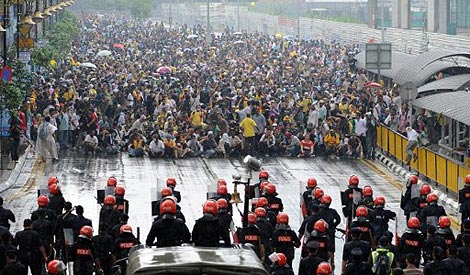
心声。。。
原本净选盟代表人民向政府请谏,要求政府实行一个公平、廉洁、透明的选举改革。但是蓝色政府却把净选盟拒之门外,不把意见放在圆桌上对话、探讨,一意孤行,当耳边风。
在无奈之下,净选盟唯有发起7月9日“净选盟2.0”和平大集合,借助人民的力量,再次向政府请谏。悲愤蓝色政府还是无动于衷,而且还摆出强权政治姿态、以一切野蛮霸道的手段,施压净选盟,恐吓人民,目的是要强迫人民放弃应有请柬的权力,更可耻的是禁锢民众穿黄色衣服,逢黄必捉,真让人啼笑皆非。曾几何时也禁过民众穿黑衣,在大马是没有穿着颜色的自由,这不强人所难吗?
在7月9日,我们可以看到一个团结的大马,这是一场所有种族都挺身而出捍卫基本人权和选举权利的集会。我们要的是文明社会,以及自由公平选举。因为蓝色政府已经忘本,忘了他们有今天是民众推举出来的。
事发之后,那些官大爷们就一直跳出来否认他们的过错。一哥最棒的实际行动就是出国去了,逃之夭夭,向来大声的二哥,销声匿迹,也许忙着接下来要使出什么阴谋诡计。而那位大口国防部长就站出来说一切都为国家安全设想。蔡老不甘寂寞就来个马后炮,廖兄就睁眼说瞎话,还有那位我一眼看过去就想赏她一把掌的黄姐的胡说八道、强词夺理。好啦就让你们说吧!实事就摆在眼前,网上一直不断的流传着当天所发生的铁证。我还在瞧蓝色政府还会怎样的颠倒是非。
从网上看,人民是如此的安分守己,一步一步的实践着和平游行的承诺。令人发指的就是那些如面临大敌,惊慌失措的警察、保安部队对付那些手无寸铁的平民百姓。这些所谓的“合法流氓”真的已经分别不出“和平游行”和“暴力示威”了。而且也不专业,忘了国际的规则,连医院范围也袭击。真悲哀!怪不得连联合国的人权组织也忍无可忍。成员国知法犯法,还要怎么忍呢?
人民深爱着这个国家,无奈这个国家的领导们却仇恨它的人民。蓝色政府,你的腐败天地不容,你的执迷不悟,一错再错,真的彻底令人失望、心寒。身为人民之一的我,我选择不原谅!
Saturday, July 9, 2011
Subscribe to:
Posts (Atom)